
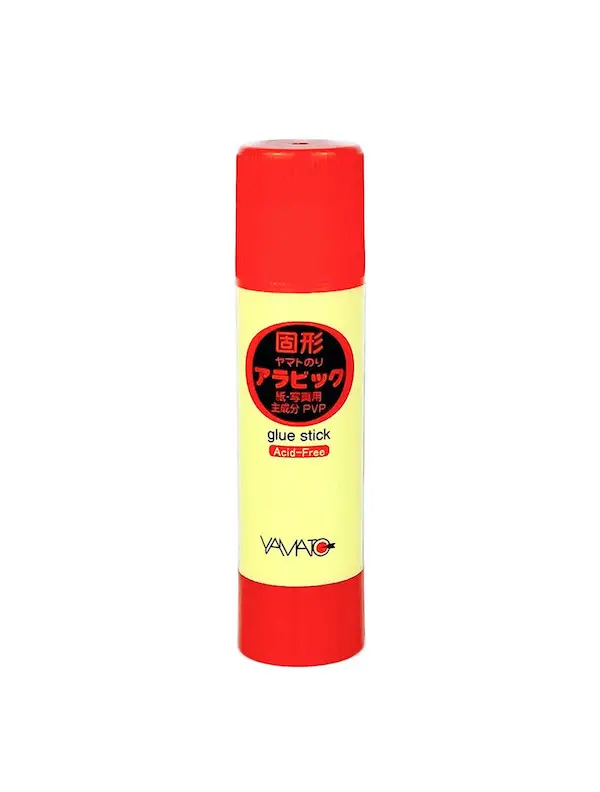
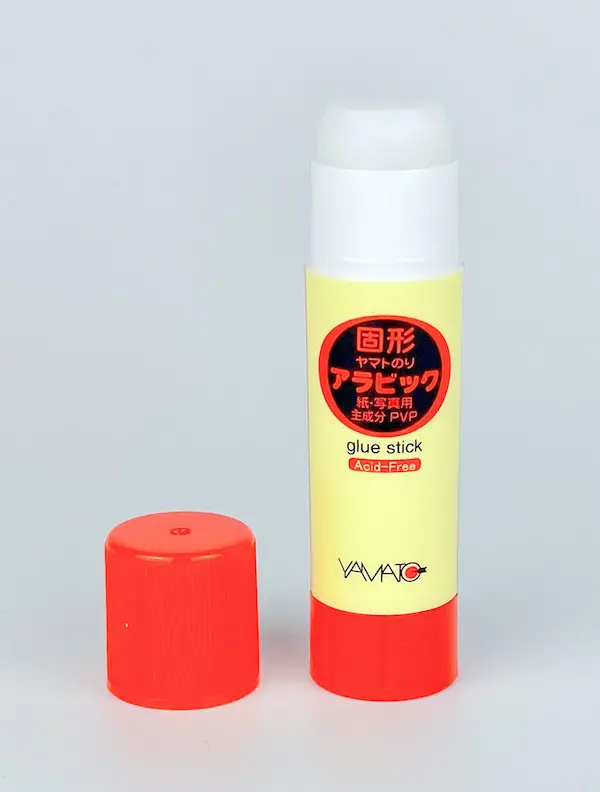
Glue stick YAMATO 10 g
Product code: 601086Yamato Traditional Japanese Starch Glues (Nori) – An Ecological and Silky Touch for Paper Arts
Since 1899, Yamato has been manufacturing traditional starch glue (known in Japanese as "nori"), winning the hearts of bookbinders, conservators, schoolchildren, and professional artists worldwide. Made entirely from natural, eco-friendly materials, this adhesive is specially designed for delicate paper projects.
Unlike Western PVA glues, Yamato glue does not alter the texture or nature of paper, preserving the transparency, flexibility, and silky surface of even the thinnest sheets (such as washi and chiyogami).
Characteristics and Advantages of Yamato Glues:
100% Natural and Non-Toxic: Made from a base of pure tapioca starch and water. The glue is completely odorless, solvent-free, and emits no chemical fumes. It is so safe for the skin that in Japanese kindergartens and schools, children traditionally apply it to paper directly with their fingers!
Acid-Free & Photo-Safe: The glue contains no formalin or other harsh preservatives. It will not turn photos or design papers yellow or brittle over the years (or centuries).
Slow Drying Time for Precise Work: Unlike fast-acting adhesives, Yamato paste dries slowly. This gives artists ample time to adjust positioning, fold, and perfectly align details.
Reversible Bond: A favorite feature among art restorers! Once dry, the bond is exceptionally durable, yet it can be easily reactivated with water to separate components without damaging the surface. It is also ideal for covering traditional shoji paper screens.
Yamato Starch Paste in a Squeezable Tube (Available: 55g and 220g)
A traditional, ready-to-use paste with a silky texture packaged in an iconic, brightly colored retro tube made from recycled plastic.
55g Tube: Pocket-sized and convenient to take on the go. Tubes come in various fun, vibrant colors (yellow, green, pink, and blue).
220g Tube: The classic green tube with a yellow cap. The best choice for larger projects, bookbinding, and regular studio use.
How to use: Squeeze a small amount of paste from the tube and apply it to the paper using a fingertip, a sponge, or a flat brush.
Best for: Origami, bookbinding, cartonnage, gluing Japanese washi and chiyogami papers, collages, and papier-mâché.
Yamato Starch Glue Stick (10g)
An ideal, mess-free alternative for those who prefer a classic glue stick format but want to enjoy the softness of Japanese starch glue. Packaged in a casing made from recycled plastic.Why is it special? Unlike standard Western school glue sticks, which often become lumpy on paper and dry out quickly in the tube, the Yamato 10g stick is made from a special soft starch formula. It glides onto paper in an even, silky layer without wrinkling the sheets.
Best for: Bullet journaling, scrapbooking, mounting photos in albums, and everyday office use.
Clever Tips and Recommendations for Crafters
Thinning: When working with exceptionally thin, veil-like crafting paper, you can mix a few drops of pure water into the Yamato paste on a palette. This allows for an even thinner application with a brush. Note: Excess water will reduce the bonding strength of the adhesive.
Fabric Arts and Sewing: Yamato paste is widely used in Japan for making Kanzashi (traditional hairpins) and for temporarily basting fabrics before sewing, as the glue is easily penetrated by a needle and washes out completely in the laundry.
Cleanup: Because the adhesive is water-based and chemical-free, brushes, workspaces, and fingers can be washed clean using just lukewarm water—no soap or solvents required.
Does Yamato starch glue need to be stored in the refrigerator?
No, absolutely not. Yamato glue must be stored at normal room temperature (15–25°C). Temperatures that are too low or refrigeration can break down the starch structure, making the glue watery and ruining its adhesive properties. Keep the glue away from direct sunlight and radiators.
Is this glue suitable for children?
Yes, it is the perfect glue for schools and kindergartens. Yamato starch paste is 100% natural, non-toxic, and solvent-free. It is so safe that Japanese students routinely apply it directly with their fingers. It washes out of skin and clothing easily with lukewarm water.
What should I do if the glue has dried out slightly at the tip of the tube?
Since this is a water-based natural paste, leaving the cap off can cause a dry crust to form at the tip. To fix this, simply remove the dried piece with your finger or apply a few drops of lukewarm water to the tip to soften the starch up again. Always close the cap tightly immediately after use.
How can I ensure the glue in the tube does not get moldy?
Since the formula consists of pure tapioca starch, cleanliness is the key to longevity. If you take glue from the tube with your finger, make sure your hands are clean. Dirt and bacteria can cause the natural starch to spoil over a long period. If you use a brush or a spatula, wash them clean before dipping them into the glue.
Is Yamato glue suitable for thick cardboard or wood?
No, it is not. Yamato is specifically formulated for natural fiber papers (origami, washi, bookbinding, collages, thin cardstock). For wood, leather, plastic, or very heavy construction materials, the initial tack of starch glue is too weak. For those types of projects, please select an acrylic-based adhesive from our shop, such as Tombow or Kuretake.
Technical Characteristics:
Main Component (Tubes): 100% pure tapioca starch and water
Main Component (Stick): PVP / Starch modification
Safety: Acid-Free, non-toxic, odorless, formalin-free
Country of Origin: Japan (Yamato Co., Ltd.)
4.10